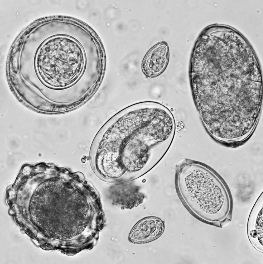
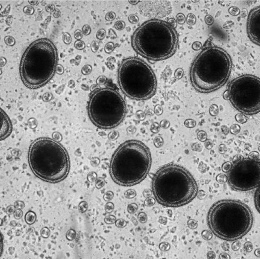
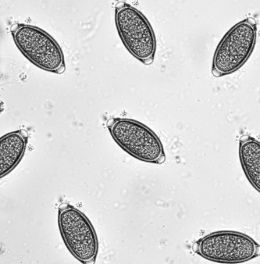
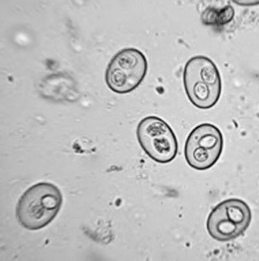
For larger animals (sheep, cattle, alpacas etc) it is important to calculate the number of worm eggs per gram of droppings FEC (faecal egg count) as most will show some level of worm presence and the exact load will decide what treatment is necessary. This is particularly important with sheep as many flocks now have increasing resistance to the traditional drenches used.
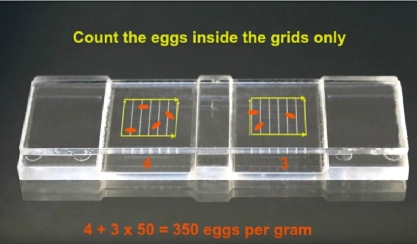
For smaller animals and birds (hedgehogs, racing pigeons etc) the presence of worm at any level requires intervention so the exact number is not as important. If you wanted to count then a counting chamber is available as an accessory to the kit.
We offer two kits:
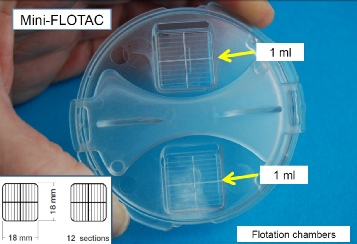
The mini Flotac system which is ideal for multiple tests on larger animals that need counts.
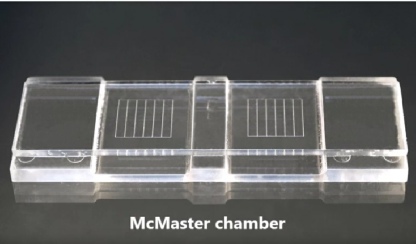
The Mcmaster system is used both for simple identification. This is the choice for small animals and racing pigeons where the number is not important.
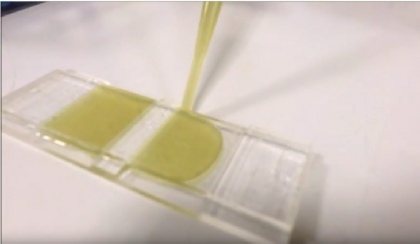
The images below, for each kit, will give an idea of the processes used. Irrespective of the kit chosen full instructions are provided with photographs of what you are looking for. Both systems really are simple to use - you do need a microscope as well of course. Both methods use the same basic principle of thoroughly mashing droppings in a solution and loading some of the filtered fluid into a counting chamber. If a count is not required straight then onto a microscope slide (McMaster Kit).
Mini Flotac Kit
Everything needed is supplied:
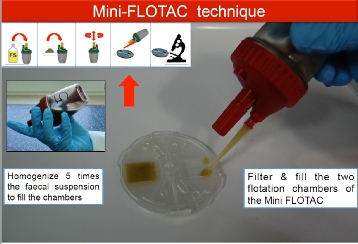
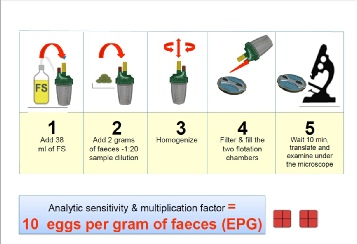
Droppings are homogenised in the plunger unit with the supplied fluid.
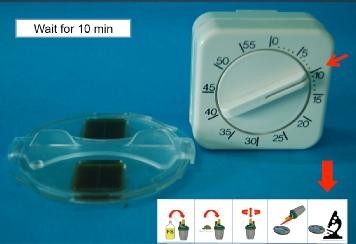
The 2 chambers of the circular counting chamber are filled and left for 10 minutes.
Eggs present will float to the top of the fluid.
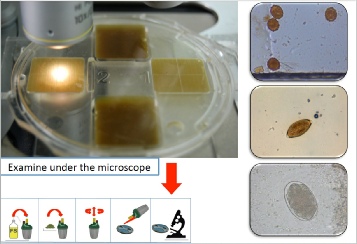
The top of the chamber is twisted and any eggs are pushed over onto the counting area.
The whole circular unit is then examined under the microscope and eggs counted.
McMaster Kit
Everything needed is supplied:
Droppings are mashed in the solution and passed through the sieve.
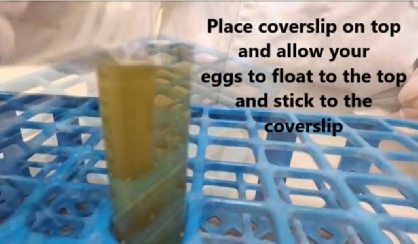
Because identification only is needed then the flotation fluid allows eggs to float to the top of the tube.
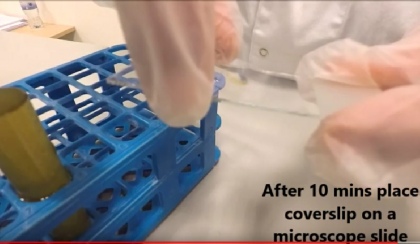
Take a small amount from the top of the tube.
Examine with your microscope
If you really want to count we can supply a counting chamber. See the accessories